
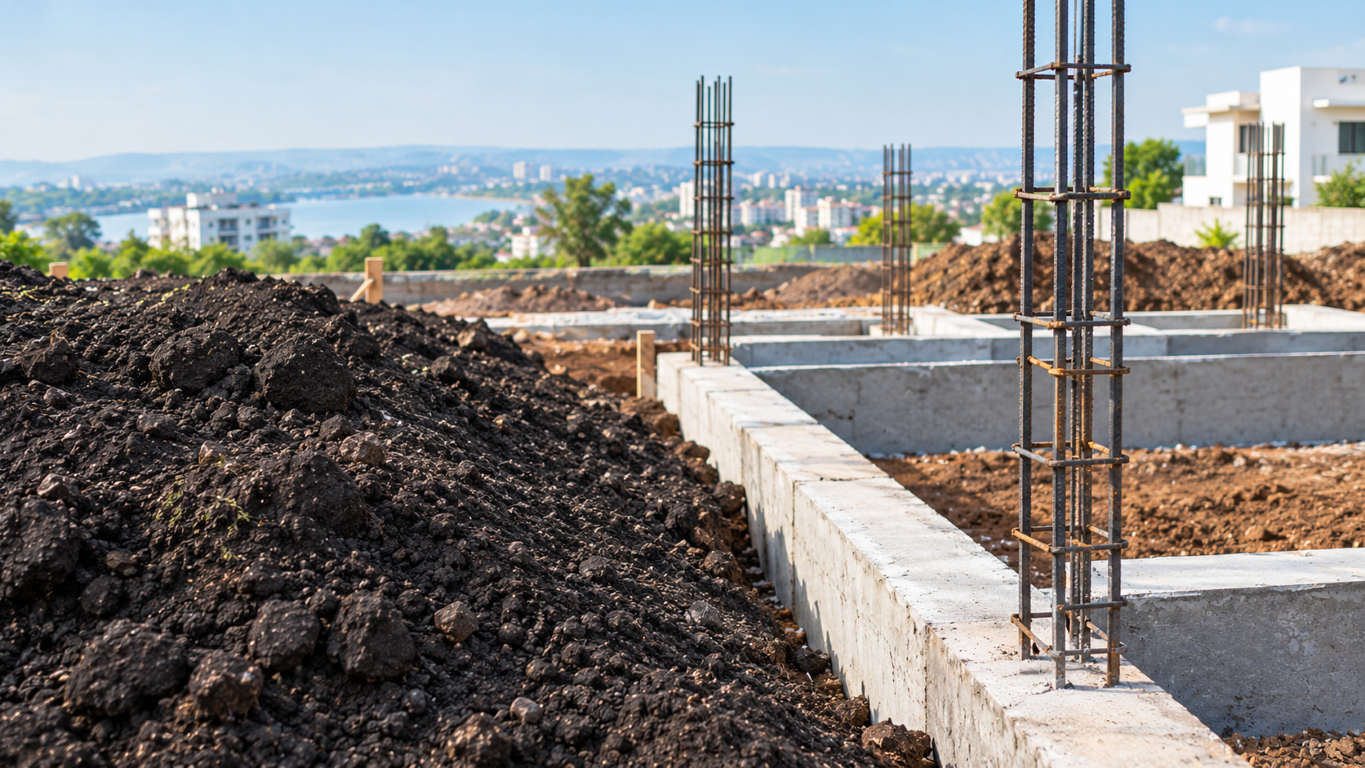
The foundation of your home starts with something you may never see once construction is complete: the soil beneath your plot. For homeowners in Bhopal, understanding the soil condition of your site is an important part of planning a safe and durable home. Some areas may have black expansive soil, which can behave differently as its moisture content changes.
During wet conditions, the soil can swell, while prolonged dry conditions can cause it to shrink. These repeated changes can lead to ground movement and, if not properly considered during construction, may place stress on the foundation and structure above it. But does black soil mean you cannot build your dream home? Absolutely not.
Building on black soil simply requires the site to be understood properly from the beginning. A suitable approach may involve soil investigation, appropriate foundation planning, effective drainage, and structural design based on the specific conditions of the plot. Getting these decisions right at the planning stage can help reduce potential problems and create a stronger foundation for the home.
This is where the expertise of an experienced architect in Bhopal can make a difference. Good design is not only about how your home looks; it is also about understanding the conditions on which that home will stand.
Here is what every Bhopal homeowner should know about black soil and house foundations.
What Makes Black Soil Different?
Black soil, often referred to as expansive soil, has the ability to absorb and retain considerable amounts of water. As its moisture content changes, the soil can expand and contract. For a homeowner, this matters because a foundation sits directly in or on the soil. If the ground beneath different parts of a house moves unevenly, it can place stress on the structure.
This doesn’t mean every property with black soil will experience foundation problems. The actual soil conditions of the site, the depth and characteristics of the soil, building loads, foundation design and water management all play a role. That’s why understanding the plot before construction is so important.
Why Soil Testing Should Come Before Construction
One of the biggest mistakes homeowners can make is assuming that every plot requires the same foundation. Before finalising foundation design, a proper soil investigation can provide valuable information about the ground conditions. It helps the design and structural team understand the soil profile and determine what kind of foundation and structural approach may be appropriate. A beautiful architectural design cannot compensate for poor site assessment.
For homeowners working with architecture firms in Bhopal, it is worth asking whether site conditions and soil investigation are being considered as part of the planning process.
How Can Black Soil Affect a House?
The biggest concern with expansive soil is its movement. During periods of high moisture, black soil can expand. During drier conditions, it can shrink. Repeated changes can potentially contribute to:
- Cracks in walls or floors
- Uneven settlement
- Movement around foundations
- Gaps or changes around doors and windows
- Damage associated with poor drainage or uncontrolled water around the structure
However, these problems aren’t simply caused by the presence of black soil. Poor site assessment, unsuitable foundation design and inadequate water management can increase the risk. This is why foundation decisions should be based on engineering assessment rather than assumptions.
Foundation Design Needs to Be Site Specific
There is no universal foundation solution for every Bhopal plot. Depending on the soil investigation, structural requirements and site conditions, engineers may consider different foundation systems or soil-improvement measures. The important point for homeowners is simple:
Don’t choose a foundation because it worked for your neighbour. Choose it because it is appropriate for your site and your building. An experienced architectural team can coordinate with structural professionals to ensure that the architectural design and structural requirements work together from the beginning.
Why Local Expertise Matters When Building in Bhopal
Every city has its own construction realities, and Bhopal is no exception. A home needs to respond not only to the client’s lifestyle and aesthetic preferences but also to local climate, soil conditions, available materials, construction practices and site characteristics.
This is where Bricks Architects brings practical value to the design process. As a team working with homeowners in Bhopal, Bricks Architects focuses on understanding the site before translating a homeowner’s requirements into a design. From planning and architectural design to coordination with structural requirements and practical execution, the approach is centred around creating homes that work in the real world.
If you’re comparing the best architecture firms in Bhopal, look beyond portfolios alone. Ask how the firm approaches your site, how it coordinates structural requirements and how much attention it gives to local construction conditions.
Final Thoughts
Black soil should not stop you from building your dream home in Bhopal. But it should stop you from taking foundation planning lightly. Understanding the soil, assessing site conditions, managing water and coordinating architectural and structural design can help create a more reliable foundation for your home.
The site-first approach is what makes experienced professionals valuable when building a home. If you’re looking for the best architect in Bhopal, choose a team that understands both design and the practical realities of construction.
Bricks Architects brings local knowledge, thoughtful design and practical construction understanding together to help Bhopal homeowners build with greater confidence from the foundation upward.